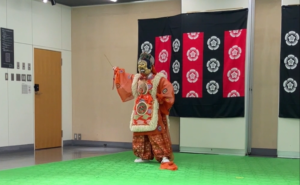
Karyobin (Suwa-Minamikata Shrine)
Karyobin (the Celestial Bird Dance) is a classical Bugaku (court dance and music) piece that evokes the beauty of Buddhist paradise. It represents a mythical bird said to reside in the Pure Land, renowned for its exquisite and captivating voice. Introduced to Japan in the 8th century by the monk Buttetsu as one of the Rinyu Hachigaku (eight pieces from Southern Vietnam), Karyobin came to symbolize the deep connection between Buddhism and court culture during the Heian period.
This divine elegance is famously captured in The Tale of Genji (“The Butterflies” chapter):
“Among the clear, bright calls of the warblers, the lively bird music resounded gracefully, while the waterfowl on the pond chimed in with their subtle songs. As the tempo quickened toward the end, it was utterly captivating.”
The dancers’ striking attire vividly brings this heavenly creature to life. They wear short robes (ho) and tucked trousers (sashinuki) patterned with bird motifs and the character “ka” (か), along with gaiters (kyahan) that mimic bird feet. On their backs, they carry crafted bird wings, and as they dance, they ring small copper cymbals (dobyoshi) held in their hands, creating a rhythmic and ethereal sound. Combining bright visuals, delicate movements, and sacred history, Karyobin remains one of the most enchanting treasures of Japan’s traditional performing arts.
Follow me!