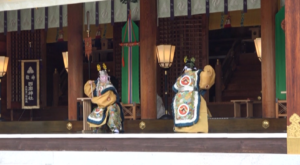
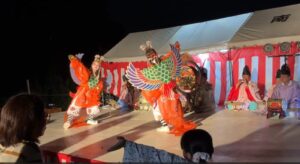
Ryōō (Ashiya City Hall)
Ryōō (also known as Ranryōō or “Prince Lanling”) is one of the most iconic dances in the Japanese bugaku repertoire. Bugaku, the ancient court dance tradition accompanied by gagaku music, has been performed for more than 1,200 years at the imperial court, major shrines, and temples. Ryōō belongs to the samai (Dance of the Left) tradition and is characterized by vigorous, dynamic movements that convey the presence of a heroic military leader.
The dance is based on the legend of Gao Changgong (541–573), a prince of Lanling during China’s Northern Qi dynasty. Renowned for his intelligence and bravery, he was also said to possess a gentle, strikingly beautiful face—so beautiful that his soldiers feared he would not appear intimidating in battle. To inspire his troops and strike fear into the enemy, he wore a terrifying golden mask, leading his army to decisive victories. Ryōō is believed to have been created to celebrate his valor.
The performer’s costume is one of the most elaborate in bugaku. It features a ryōtō battle tunic woven with dragon motifs and a scarlet robe decorated with cloud patterns. The dancer wears a gilded mask topped with a dragon—its movable eyes and hanging chin piece enhancing the fierce expression. In children’s performances, a tenkan crown replaces the mask. The dancer carries a golden baton symbolizing command on the battlefield.
Ryōō is often performed on auspicious occasions and remains one of the most frequently staged bugaku dances today. Its striking choreography, brilliant costume, and dramatic legend offer a vivid glimpse into the fusion of continental influences and Japanese court aesthetics that shaped classical performing arts.
Follow me!